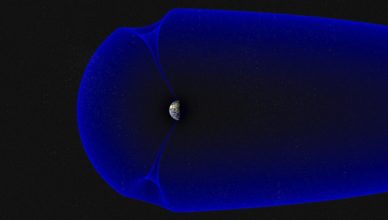
Update: To image leaky atmosphere, NASA rocket team heads north — ScienceDaily In the future, the Earth System could potentially follow many trajectories (12,
[Read more]
We need to implement reglobalization from the bottom-up in order to achieve a more sustainable global economy. Geopolitics is an extension of the
[Read more]
[youtube=http://www.youtube.com/watch?v=6Ghzomm15yE] Documentary based on the book with the same name by Alvin Toffler, narrated by Orson Welles.
[Read more]
Britain will overtake Germany and France to become the biggest country in the EU in 50 years’ time, according to population projections unveiled
[Read more]
The previously unpublished figures suggest the British population could hit almost 110m in 2081, if immigration fertility and longevity rates are high. Source:
[Read more]
Most recently, Dr. Gupta embarked upon a remarkable quest to investigate “new discoveries in the search for immortality to help you age less
[Read more]
Three years ago in The Atlantic, the Harvard philosopher Michael Sandel wrote a critique of genetic engineering titled “The Case Against Perfection.” Now
[Read more]